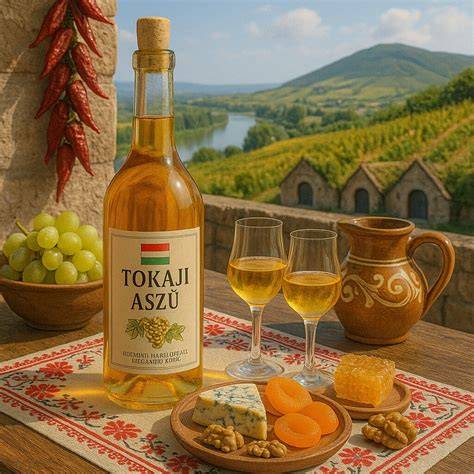
Winemakers craft this exceptional wine from grapes affected by “noble rot,” a beneficial mold called Botrytis cinerea. This mold shrivels the grapes and concentrates their sugars and flavors. The history of the Tokaj wine region dates back to the 16th century, with its first recorded mention in 1571. Hungarian kings and noble families prized Tokaji Aszú for its exceptional quality.
Producing Tokaji Aszú requires careful, labor-intensive work. Harvesters pick the grapes by hand, selecting each berry individually, and collect them in containers called puttonyos. After the harvest, winemakers turn the grapes into a rich paste. They then mix this paste with a base wine or must. The mixture ferments in oak barrels for several years, while it develops depth and complexity.
Tokaji Aszú displays a beautiful golden amber color and offers a rich, complex aroma. It often reveals notes of dried apricots, honey, and citrus. Although the wine tastes sweet, its vibrant acidity keeps it balanced. Tokaji Aszú is also known for its remarkable aging potential-properly stored bottles can last for decades. Today, this wine remains a symbol of Hungarian heritage. Admired by wine lovers around the world, it is considered a luxury product.
Bring the flavor home: Tokaji Aszú deserves proper glassware. this set of dessert wine glasses is sized just right for sipping something this rich and sweet.
During numerous trips to the Tokaj-Hegyalja region in Hungary, I’ve had the opportunity to taste hundreds of Tokaji dessert wines, and I’ve managed to build a small personal collection.
János Árvay is a heavyweight in the Tokaj region. When we visited the winery back in 2005, it was located in the Citizens Casino, a historical building in the center of Tokaj. In 2009, Árvay left his business partner Krisztián Sauska (who now produces wine under his own name) and moved to the nearby village of Rátka. For those who want more than just a visit of the facility, the new winery seems to offer harvest and rock-collecting trips, and even an Árvay adventure tour - “Grapes, wines, rocks, adventures.”
The Hétfürtös Tokaji Aszú 6 Puttonyos 1999 is named after the winemaker’s cultivation method. “The wines of Hétfürtös (Seven Clusters) get their name from our strict process of yield control; never more than seven clusters of fruit are left on each vine to fully maximize the concentration of flavors as the grapes ripen. The wine displays the golden amber hues that I associate with a good aszú. While the first nose is citrusy, apricot preserves and honey take over on subsequent sniffs. This is a good Tokaji, a very good one even, but it’s not great, which is disappointing for an Árvay.”
In 2002 UNESCO inscribed the Tokaj Wine Region Historic Cultural Landscape into the list of World Heritage with the aim of protecting its historic architectural and natural environments. The Tokaj Wine Region has an averagely hot, dry continental climate. The Tokaj Wine Region’s incredibly diverse terroirs are unique. The extremely dynamic relatively recent geological past resulted in a wide range of topography, geology and soils. A strict protection of origin specification regulates the grape varieties that can be used to make Tokaji wines. The uniqueness of the Tokaj Wine Region is primarily thanks to the aszú berries and the wines made from them. years old The first reference is linked to Máté Garai who in 1571 first mentioned aszú szőlő bor (literally aszú grape wine), the predecessor to the world-famous liquid gold we know today.
Fontos személyek és helyszínek a Tokaj történetében
A Hétfürtös Tokaji Aszú 6 Puttonyos 1999 nevét a termő minta és a szőlő aránya adja, amely a termesztési módszer szigorú korlátozását tükrözi. János Árvay szerepe a régióban jelentős; a tokaji borvidék egyik vezető alakja, aki hozzájárul a hagyományok megőrzéséhez és a minőség emeléséhez. A 2005-ös látogatás Tokaj központjában, a Citizens Casino historikus épületében zajlott, majd 2009-ben Árvay együttműködését finanszírozó Krisztián Sauska saját néven folytatta tevékenységét, így Árvay a közelben fekvő Rátkára költözött. A látogatók számára a borászatok gyakran kínálnak aratás- és kőgyűjtés-túrákat, illetve Árvay kalandtúrákat is, a borok és a hegyek összefonódó élményével.
Az aszúszőlőbogyókat érintő nemes rothadás a tokaji borvidék különleges értékét adja: a cukor és az aromák sűrűsödnek, a tokaji aszú pedig a gazdag, komplex karakterével tűnik ki. A gazdag történelmi örökség és a terroir együttese tette a Tokaji Aszút a világ egyik legismertebb desszertborává, amelyet még ma is a magyar hagyományok és innováció ötvözete jellemez.